
Smart City
Anomaly Detection in IoT
This project studies how to detect anomalous behavior in IoT sensor networks so that downstream systems can trust incoming measurements and react appropriately when readings are surprising or inconsistent.
Back to Research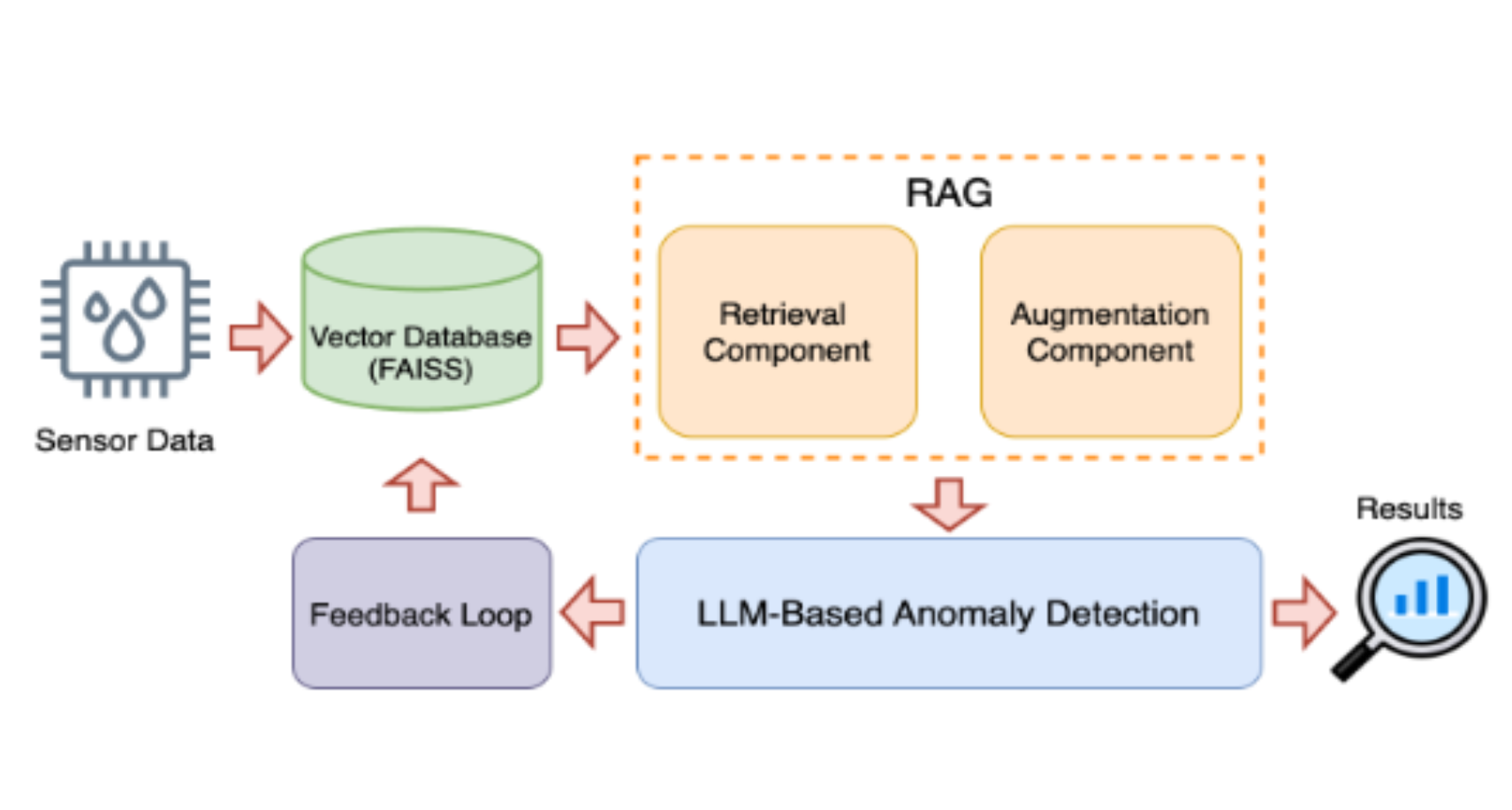
Project Summary
Clustering, deep learning, GAN-based and LLM-based anomaly detection for sensor reliability.
The core problem is ensuring sensors provide reliable information in large real-world deployments, where noisy data, faulty devices, and unexpected environmental conditions can all produce misleading measurements. Develop anomaly detection workflows that can flag suspicious sensor behavior accurately and support decision-making in urban sensing environments. The project investigates clustering-based approaches such as K-Means and DBSCAN, deep learning approaches including GAN-based anomaly detection, and LLM-supported reasoning over sensor outputs. It draws on the Chicago Array of Things dataset, a multi-year urban sensing dataset with hundreds of sensors and rich temporal variation. The work aims to improve both anomaly detection quality and interpretability for complex smart-city sensor systems.